How everyday talking supports language
Words woven into nappy changes, walks, and meals — everyday talk that builds language without flashcards.
Language Lives in Ordinary Minutes
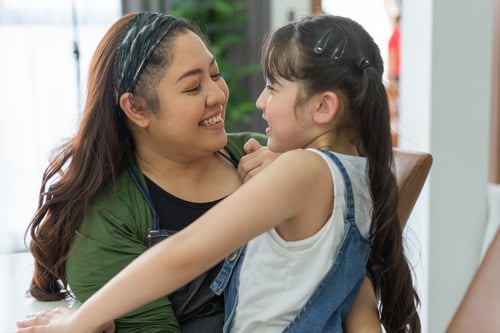
You do not need a curriculum pack to support speech and language. You need conversation woven into the day: looking at the same thing together, naming it, waiting for a response, answering back. Researchers call rhythms like this serve-and-return. Parents call it chatting while you live your actual life, nappy bag on one shoulder and all.
Tiny Steps language activities exist to make that chatting feel intentional on tired days — not to replace your own voice with expert scripts forever, and not to add one more thing you must perform correctly.
Narrate what you are doing
"I'm opening the window — hear the rain?" "Socks on. Now the other sock." It feels a little silly at first, until you realise babies and toddlers map the entire world through your soundtrack, word by ordinary word. Talk to pēpi about your day and name three things you see keep the habit playful rather than effortful.
You do not need to narrate constantly, and doing so all day would exhaust anyone. A few minutes scattered through nappy changes, car rides, and meals adds up over a week far more than one heroic marathon session ever could.
Pause for their turn
After you speak, wait — longer than feels natural at first. Eyes, sounds, smiles, and later actual words all count as a turn in the conversation. Filling every silence with more adult talk can crowd them out of a conversation that was meant to include them.
This pause is often the hardest part to practise, since silence with a baby can feel like something has gone wrong. It usually has not. It is simply their turn arriving on toddler time rather than adult time.
Songs and nonsense
Nursery rhymes, made-up car songs about the supermarket, te reo phrases you are learning together as a household — rhythm scaffolds memory in a way plain speech sometimes does not. See songs and nonsense talk and te reo lullaby try for two gentle starting points.
Books without performance
Point to pictures rather than reading every word on the page. Let them turn pages "wrong," skipping half the story without concern. Read the same board book for an entire month without complaint if that is what gets requested. Read one story together beats an unread, perfectly curated bookshelf every single time.
Talking with more than one child at once
When there are siblings in the mix, older children often absorb more airtime simply by talking faster and louder. Look for small windows — a nappy change, a car seat buckle-up — to talk one-on-one with the younger one, even briefly. It does not need to be equal every day to even out meaningfully across a week.
When to seek speech advice
If you are worried about hearing, sudden language loss, or very limited communication compared with what your Well Child nurse expects for age, ask a professional directly rather than waiting to see. KidsHealth and speech-language therapy pathways through usual care are the right doors for that conversation. This article stays deliberately in everyday enrichment mode rather than clinical territory.
Bilingual and multilingual homes
If your household speaks more than one language, keep using all of them with confidence. Mixing languages in the same sentence is normal and does not confuse a young child's developing brain — it simply reflects the household they are growing up in. Te reo Māori phrases woven into English sentences, or a grandparent's first language spoken at the dinner table, all count as rich language input, not as a complication to be resolved before "real" talking can start.
A tiny daily target
Ten minutes of undistracted talk across the day — not one continuous block — already matters more than it seems like it should. Put phones aside for a nappy change or a snack, even just once. Open Today for a language-tilted idea whenever you forget how to start the conversation yourself.
Your voice is not small talk. It is architecture, laid one ordinary sentence at a time.

Written by
Tiny Steps programme team
Part of the Vector Group Charitable Trust Resilience Programme. Tiny Steps shares practical, educational content for whānau in Aotearoa.
Ready for today's tiny steps?
Open Today for five gentle ideas you can try with your whānau.