
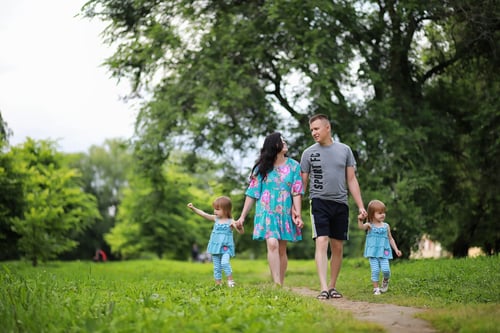
Walking the Neighbourhood Together
A walk around your neighbourhood during pregnancy is not exercise. It is orientation — learning the geography of the place your family is about to inhabit more fully.
Before the Walk Becomes a Task
Somewhere between 'gentle exercise is good in pregnancy' and the five-kilometre tracked walk with heart rate data, there is a much simpler thing: a slow amble around your neighbourhood with no agenda other than the walk itself. This is the walk worth talking about.
Not measured. Not optimised. Just the two of you — or just you — moving through the streets that will become the backdrop of your family's life, noticing what is there.
What You Might Not Have Noticed Yet
Pregnancy has a way of slowing you down enough to see things you walk past regularly without registering. Here is what people tend to notice on slow neighbourhood walks during pregnancy, some for the first time:
- ✓The park that is closer than you thought, with a bench near the playground
- ✓The library branch you had filed away as 'somewhere nearby'
- ✓The dairy that stays open late — not glamorous, but later you will know this matters
- ✓The neighbour with the well-established garden who waves
- ✓The hill you always drive around that is actually a gentle slope when you choose a different route
- ✓The pohutukawa that is just beginning to turn red at the tips
- ✓Which streets have footpaths with prams in mind and which do not
This is useful knowledge. It is the local geography of daily life, and you are about to inhabit it much more completely than you do now.
Walking Together as a Ritual
For couples and partners, the evening walk during pregnancy can become one of the understated gifts of this period. Away from screens and the particular gravity of home, conversations tend to loosen. There is something about moving side by side, rather than face to face, that makes certain things easier to say.
Some of the best conversations about hopes and fears, names, family relationships, and the unknown territory ahead happen on slow evening walks rather than in serious face-to-face discussions. If you have been wanting to talk about something and not quite finding the moment, try walking.
Walking Alone as a Form of Self-Knowledge
For those who walk solo, the neighbourhood walk can be a form of quiet self-check. A chance to notice how you are actually doing, away from the social pressure to report a particular version. Some people talk to themselves. Some listen to music or a podcast. Some walk in deliberate silence, noticing the birds, the light, the specific quality of the air.
New Zealand's outdoor spaces — even urban ones — tend to have some quality of the natural close by. The tūī in the garden trees. The harbour visible at the end of certain streets. The way the hills look in the particular light of a winter afternoon. These small encounters with nature have measurable effects on stress and mood, and they do not require a special destination. They are already where you are.
The Neighbourhood You Are Preparing For
There is a particular flavour to walking your neighbourhood when you are pregnant, and it is this: you are not just walking through it. You are beginning to see it as the place where your child will grow up. The park bench becomes the bench where you will eat a sandwich in six months with a baby asleep in the pram. The library is where Storytime will happen. The neighbours with the friendly cat will become faces your child knows by sight before they know many words.
This is orientation work. It is slow and free and it requires nothing except the walk itself.
Practical Notes for Comfort
A few things that make neighbourhood walking more comfortable in the later stages of pregnancy:
- ✓Supportive shoes, always — the pelvis and hips shift during pregnancy and unsupported footwear becomes genuinely uncomfortable.
- ✓A water bottle, especially in summer months.
- ✓Going at a pace where conversation is possible — if you cannot comfortably talk, you are walking faster than the walk requires.
- ✓Telling someone where you are going and roughly when you will be back, not out of anxiety but out of good habit.
If you want ideas for turning a walk into a gentle activity with connection built in, the daily ideas in Tiny Steps often include prompts that work beautifully on foot. Many of the outdoor activities are designed for exactly this kind of walk — slow, present, and noticing.
The neighbourhood is already there, waiting to be known. The walk is free. You have everything you need.

Written by
Tiny Steps programme team
Part of the Vector Group Charitable Trust Resilience Programme. Tiny Steps shares practical, educational content for whānau in Aotearoa.
Ready for today's tiny steps?
Open Today for five gentle ideas you can try with your whānau.