
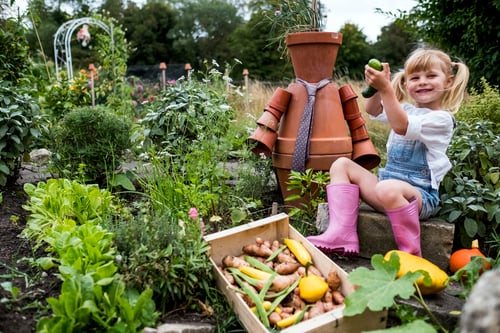
Tamariki in the maara / garden
For young tamariki, a garden — even a few pots on a balcony — is one of the richest learning environments available. It is full of life, change, and real work.
The maara as a place of belonging
Maara is the Māori word for a cultivated garden — a place of growing, tending, and harvest. For young tamariki, a garden (even a few pots on a sunny balcony) offers something rare in modern life: direct contact with where food comes from, and the slow satisfaction of caring for something alive.
Gardening with under-fives is not efficient. Seeds will be planted too deep, seedlings will be watered twice, ripe tomatoes will disappear before the adults notice them. All of this is correct. The efficiency is not the point.
What children can actually do
The list of real, meaningful garden tasks for young children is longer than most adults expect:
- ✓Watering with a small watering can or helping direct a hose
- ✓Pressing seeds into prepared soil — broad beans are especially good, as their size makes them easy to handle
- ✓Picking ripe tomatoes, strawberries, peas, or beans
- ✓Digging with a small spade or even a sturdy spoon
- ✓Pulling weeds (with guidance — not all green things are weeds)
- ✓Collecting fallen leaves or adding to a compost pile
- ✓Carrying harvested vegetables inside
None of these are pretend tasks. They are real contributions to a real garden, and children feel the difference.
What they learn without being told
The garden teaches in the slowest possible way, which is often the most lasting:
- ✓Things need consistent care to grow. A seed pressed in and forgotten dies. A seed watered every morning lives. This is a lesson in cause and effect that takes weeks to complete.
- ✓Some things you grow, you eat. The connection between soil and meal is one that most urban children do not have access to. A carrot pulled from the ground and eaten on the spot is transformative.
- ✓The ground is alive. Worms, beetles, slaters, and millipedes in the soil are interesting, not dangerous. A child who digs confidently in a garden has a different relationship with the natural world.
- ✓Seasons turn. Something planted in early spring is different by summer — taller, fuller, producing. Children who garden over multiple seasons begin to feel this rhythm in their bodies.
NZ context: what grows well here
Aotearoa's climate is generous for gardening. Some of the most satisfying things to grow with young children in most NZ regions:
- ✓Strawberries: reliably popular, immediately eaten
- ✓Peas: fast-growing, easy to shell, sweet raw
- ✓Courgettes: nearly impossible to fail, comically large
- ✓Kūmara: deep cultural resonance, a slow grower but satisfying
- ✓Harakeke (flax): not edible, but important and beautiful; the long leaves and the birds it attracts are worth growing for their own sake
On imperfection
Some seeds won't sprout. Some seedlings will be stepped on. The tomato your child bites into in the garden, leaving the rest on the vine, is fine. Let the imperfections stand. 'That one didn't make it — shall we try again?' is a complete and sufficient response.
Starting where you are
You do not need a full garden. A single pot on a windowsill is enough. A strawberry plant in a hanging basket. A broad bean in a glass jar against the light so you can watch the roots develop. The size of the space matters less than the habit of paying attention to it together.
For more seasonal activity ideas, visit our activities section. Plunket also has helpful guidance on getting tamariki outdoors and active through the year.
The soil itself
The garden is also an introduction to soil — one of the most complex and alive substances on the planet. A teaspoon of healthy garden soil contains more microorganisms than there are people on Earth. Young children do not need to know this fact. But they can feel that the earth is interesting, not just dirt.
Let them dig. Let them find worms (and observe rather than harm them). Let them see how the soil near a compost pile is darker and richer than the soil at the edge of the section. These observations, made with curiosity rather than instruction, are the beginning of ecological literacy.
Composting as a simple loop
A small compost pile or bin — even a simple one — closes the loop between kitchen and garden in a way that young children find genuinely compelling. The banana peel that went in three weeks ago is now dark and crumbly and smells like earth. The carrot tops, transformed. The loop from plate to soil to plant and back to plate is one of the oldest and most important stories there is.
For more nature-based family activities, browse our outdoor packs or visit Plunket's family resources.

Written by
Tiny Steps programme team
Part of the Vector Group Charitable Trust Resilience Programme. Tiny Steps shares practical, educational content for whānau in Aotearoa.
Ready for today's tiny steps?
Open Today for five gentle ideas you can try with your whānau.