
Shared meals when picky eating shows up
Picky eating is one of the most universally stressful parts of raising a young child. Here's what's actually happening — and why the mealtime battlefield usually makes it worse.
The table as a battleground
You made the meal. They ate it last week. Now they are sitting in front of it with a look that says the plate has personally offended them. And you feel — genuinely feel — a kind of frustration that is hard to explain to anyone who hasn't lived it.
Picky eating is one of the most universally stressful parts of parenting young children. It touches something primal: the need to nourish the person you love. When they refuse the food, it can feel like rejection — of your effort, your care, maybe even you.
What is actually happening
Food neophobia — the strong resistance to unfamiliar or mixed foods — is completely normal in children aged roughly two to five. It is thought to be an evolutionary adaptation from a time when new foods could be dangerous. Your child's caution around food is not stubbornness. It is, in a way, an ancient survival instinct.
The good news is that it passes. The less good news is that it passes on its own timeline, which is not yours.
The division of responsibility
A framework that many dietitians and family health workers in Aotearoa recommend is simple: you decide what is on the table, when it appears, and where everyone eats. Your child decides whether to eat and how much.
When caregivers try to control the eating itself — the coaxing, the bargaining, the 'just three bites', the hiding vegetables — they usually make it worse. They shift the dynamic from shared meal to power struggle, and the child nearly always wins a power struggle about their own mouth.
What actually helps at the table
- ✓Serve one food your child reliably accepts alongside new or challenging foods at every meal. Not a separate meal — just something familiar on the same plate.
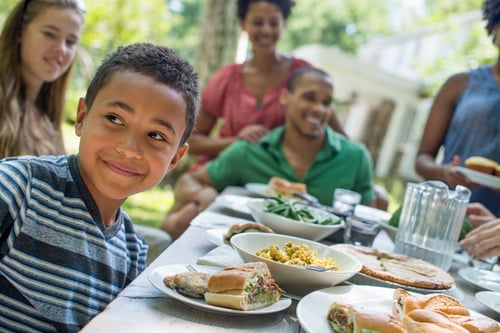
- ✓Eat together as often as possible. Children learn to eat by watching. If they see adults eating the same food calmly, the food becomes familiar over time.
- ✓Do not label the child as 'picky' within their hearing. Labels become identities.
- ✓Keep both pressure and praise low. Neither 'you have to eat that' nor 'oh my goodness, you tried it!' helps build an uncomplicated relationship with food.
- ✓Repeated, no-pressure exposure to a food — ten to fifteen times — often eventually leads to acceptance. The exposure does not have to mean eating. Looking at it on the plate counts.
On the mess
Shared meals with young children are messy. That is not a sign of the meal going badly — it is a sign that a small person is exploring food in the way that small people do: by touching it, squishing it, sorting it, and occasionally flinging it.
A mat under the high chair, a deep breath, and a low expectation of tidiness make mealtimes far more pleasant for everyone.
Meals as connection, not performance
The longer goal of shared mealtimes is not a child who eats everything. It is a child who feels at home at the table — who associates meals with warmth, talking, and togetherness. That association, built slowly through years of imperfect dinners, is the foundation of a healthy relationship with food.
A meal where your child ate only bread and drank their water and sat with you for twenty minutes is a good meal. It may not feel like it. But it is.
When to get extra support
Some children have feeding difficulties that go beyond typical picky eating — gagging or vomiting in response to textures, extreme restriction, significant anxiety around mealtimes, or very slow weight gain. If you are concerned, Plunket and Healthline NZ are both good starting points for guidance and referral pathways.
For more on food and family routines, explore our daily activities or check our resource packs.
On the family table itself
Meals at a table — seated, together, without screens — build a shared practice over years. Not every meal needs to be a formal occasion. A quick weeknight dinner eaten together at the kitchen bench counts. The habit of pausing, sitting, and eating alongside each other is the thing that matters.
Research from Aotearoa and elsewhere consistently shows that families who eat together regularly have stronger communication and a clearer sense of shared identity. The picky eater at the table is still at the table, and that is where the belonging lives.

Written by
Tiny Steps programme team
Part of the Vector Group Charitable Trust Resilience Programme. Tiny Steps shares practical, educational content for whānau in Aotearoa.
Ready for today's tiny steps?
Open Today for five gentle ideas you can try with your whānau.