
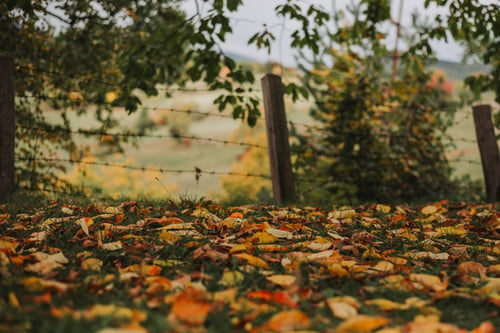
Seasonal autumn leaves in Aotearoa gardens
Aotearoa's autumn is quieter than the vivid season of the north. But in gardens and parks with deciduous trees, there is real colour, real crunch, and a seasonal richness worth gathering.
Autumn in Aotearoa
New Zealand's autumn is quieter than the vivid season celebrated in the Northern Hemisphere — there are no maple forests turning red from horizon to horizon. But in gardens and parks with deciduous trees (many planted by settlers, now towering old specimens), there is real seasonal change: colour shifting from green to gold to rust, leaves drifting, the particular crunch underfoot.
For young tamariki, autumn is one of the year's great sensory events. The leaves drift and spin. They crunch when you step on them. They come in colours that are usually reserved for winter sunsets. They are everywhere, they are free, and they are endlessly interesting to a small person.
Simple autumn activities
- ✓Collect ten leaves of different colours and shapes on a walk. Lay them out on the table at home and look at them together. Name the colours. Sort them biggest to smallest.
- ✓Press leaves between sheets of plain paper under heavy books. Return in two weeks to flat, perfect specimens that hold their colour.
- ✓Make leaf rubbings: lay a leaf vein-side up under a piece of white paper and rub the side of a crayon across it. The shape appears like a small miracle.
- ✓Sort fallen leaves by colour — a game and a language lesson in one.
- ✓Find the biggest leaf you can. Find the smallest. Find the strangest shape.
- ✓If you have enough, rake a pile large enough to jump into. This is one of childhood's better physical experiences.
What changes to notice
Deciduous trees — mostly exotic species in Aotearoa gardens, planted from Europe over the last two centuries — lose their leaves in autumn. Most NZ native trees do not. This is worth pointing out to a curious child: in autumn, the liquid amber and the oak go bare while the nīkau and the kānuka stay green.
'Why does that tree lose its leaves but that one doesn't?' is an excellent curiosity-walk question with no simple answer.
Autumn in the kitchen
Autumn is feijoa season in Aotearoa. If you have feijoa trees nearby or can find them at the supermarket, eating them with a teaspoon — or making a simple crumble — is one of the most distinctively New Zealand seasonal rituals there is. Letting a child scoop the flesh of a feijoa and eat it straight from the skin is a small, good thing to do every autumn.
Apples also peak in autumn. Visit a u-pick orchard if one is accessible — this is a direct food-awareness experience that is hard to replicate elsewhere.
The seasonal calendar as grounding
Helping young children notice the changing seasons is one of the simplest and most grounding things a caregiver can do. Children learn that the world is not static — it changes, it returns, it changes again. The tree that is bare in June will be green in October. This slow, reliable cycle is a form of resilience: the world has a rhythm, and we can trust it.
Autumn as a time of gathering
For many cultures, autumn is a time of harvest and gathering — bringing in what has grown, preparing for the cooler months ahead. For young tamariki, this can be as simple as collecting seeds from the garden, pressing the last flowers, or noting which birds are still around and which have changed with the season.
For more seasonal activity ideas, explore our activity packs or browse what's suggested for today.
The science of leaves, simply
Why do leaves change colour? Chlorophyll — the green pigment that powers photosynthesis — breaks down as the days shorten and the tree draws its resources inward. The yellows and oranges were always there, hidden under the green. The reds are made fresh, as the tree seals off its leaves before dropping them.
For a young child, the simplified version of this is genuinely interesting: 'The colour was hiding in there all along. Now we can see it.' That small idea — that things contain hidden colours, hidden depths, hidden seasons — is a beautiful one to plant.
Pressing and keeping
A pressed leaf book, started in one autumn and added to in subsequent autumns, becomes a record of the seasons your child has lived through. The leaf pressed aged three, the one from aged five, the one from aged seven. The book itself is the long story of a growing person paying attention to where they live.
For seasonal activity ideas, browse our packs or explore today's suggestions.

Written by
Tiny Steps programme team
Part of the Vector Group Charitable Trust Resilience Programme. Tiny Steps shares practical, educational content for whānau in Aotearoa.
Ready for today's tiny steps?
Open Today for five gentle ideas you can try with your whānau.