
Simple play ideas for rainy days in Aotearoa
Wet weeks are part of Kiwi childhood. Here are low-cost indoor ideas that keep connection going when the bush track is closed.
When the Rain Has Opinionated Plans
In Aotearoa the weather often decides the day before you do. Sheets of rain on the roof. Puddles swallowing the footpath. Your plans for the park evaporate, and a restless small person is already climbing the couch like a mountain range.
Rainy days do not have to become screen-only survival mode. They can still hold play, warmth, and a sense that the week is alive. Tiny Steps leans toward household materials and short ideas — not craft-store spectacles that leave you cleaning glitter out of the toaster for a fortnight.
Forts, nests, and soft architecture
A blanket over two chairs is infrastructure. Crawl inside together with a torch, a book, and one shared snack. Try the spirit of build a blanket fort or story torch under the duvet. The point is the enclosed world: voices lower, bodies closer, imagination permitted to run wherever it likes.
If energy is low, shrink it to a nest on the sofa — duvet, pillows, one story. That still counts. Quiet connection beats a Pinterest failure, and nobody remembers whether the fort was structurally sound.
Older children can be handed the engineering: which chair, which peg, where the "door" goes. Handing over the plan turns a rainy afternoon into a project rather than a babysitting problem.
Sensory play without a specialty shop
Rice, oats, dry pasta, or washed stones in a shallow tray become a dig site for twenty minutes. Add cups, spoons, and a small scoop. Keep a dustpan nearby and treat the mess as temporary. Pair this with sensory rice tray dig or low-cost sensory thinking: texture is the curriculum, not the tidy-up.
Finger paint a storm sky on cheap paper if you have paint; if not, crayons on cardboard are enough. Name colours out loud as you go — grey, silver, that odd green before hail. Language grows inside play whether you announce a lesson or not.
For babies who cannot yet sit at a tray, a damp washcloth to squeeze, a rattly bottle of dry beans (lid glued or taped shut), or bath time moved earlier in the day can carry the same sensory need safely.
Kitchen-adjacent rainy jobs
Wet days are perfect for warm, useful jobs: stirring porridge, buttering toast, setting two placemats. Browse kitchen confidence ideas for age-appropriate tasks. Children feel dignified when rain locks the gate but the household still includes their hands in something real, rather than only in entertainment.
A baking afternoon does not need to be Pinterest-perfect either. Wonky biscuits taste identical to tidy ones, and the stirring is the actual developmental point.
Wet walks and verandah wins
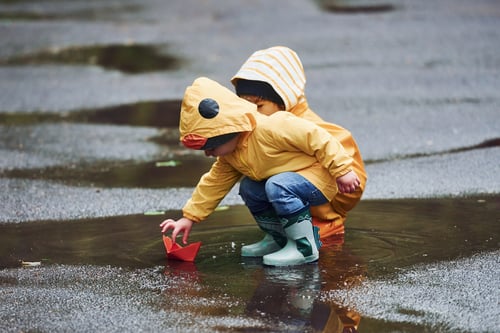
If rain is soft rather than sideways, five minutes under a verandah or a gumboot splash around the letterbox still refreshes nervous systems — yours included. See gumboot splash parade and puddle play and wet weather kit calm. Nature connection is not cancelled by cloud; it just needs a coat.
If wind is fierce or lightning unsafe, stay in. Choosing shelter is care, not failure — check current conditions through MetService before deciding an outdoor window is worth it.
Stories that stretch the afternoon
Libraries are rainy-day infrastructure. Borrow a stack, then flop. The library treasure week pack and picture book picnic sofa exist for exactly these weather windows. Read the same book twice if asked — repetition is how language wires in, even when you privately never want to see that particular duck again.
A soft enough list for one wet day
- ✓One fort or nest
- ✓One sensory tray or drawing
- ✓One kitchen micro-job
- ✓One story, or three, or the same one three times
- ✓One moment outside if safe — even opening a window and naming the rain counts
Open Today and pick whatever fits the mood. Miss items without writing a failure essay in your head. Resilience on rainy days often looks like staying kind while everyone is a little damp in spirit, tired of the same four walls, and still, somehow, fine.
Trusted weather and outdoor safety common sense still apply — and if cabin fever tips into caregiver distress, Plunket and your usual support people remain available every day the sky refuses to cooperate. The rain will stop. The connection you practised while it fell does not have to.

Written by
Tiny Steps programme team
Part of the Vector Group Charitable Trust Resilience Programme. Tiny Steps shares practical, educational content for whānau in Aotearoa.
Ready for today's tiny steps?
Open Today for five gentle ideas you can try with your whānau.