Nature: tree names and noticeboards
There's something significant about knowing the name of the tree outside your window. Not just 'tree' — but kowhai, or tōtara. Names are a form of relationship.
Why names matter
There is something significant about knowing the name of the tree outside your window. Not just 'tree' — but kowhai, or tōtara, or pōhutukawa. Names are a form of relationship. They are how we move from 'a thing out there' to 'something I know.'
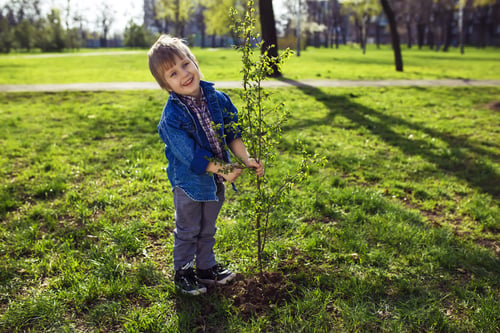
For young children, learning the names of the trees and plants around them is not primarily a knowledge exercise. It is a belonging exercise. The child who knows that the tree at the end of the street is a kowhai — who watches for the yellow flowers in spring, who has seen the tūī come to drink from them — has a relationship with that tree that a child who calls it 'just a tree' does not.
Starting with what's nearby
You do not need to know all the trees in Aotearoa. Start with three. The one in your street. The one in the park you visit most often. The one in your garden, or the neighbour's garden that hangs over your fence.
Look them up together. Many parks and reserves in New Zealand now have small noticeboards identifying their trees — the name in English, the Māori name, and sometimes a little about the tree's history on that site. These noticeboards are an underused treasure.
How to notice together
With young children, tree identification does not need to be systematic. It needs to be sensory and curious:
- ✓Bark: Is it smooth or rough? Does it come off in flakes or strips? What does it feel like?
- ✓Leaves: Big or small? Waxy or soft? Do they smell of anything when you crush one gently?
- ✓What is living in the tree? Birds, insects, lichen, moss?
- ✓Does it flower? When? What colour?
- ✓How old might it be? (Big old trees in Aotearoa can be hundreds of years old — a concept that genuinely amazes young children)
NZ native trees worth knowing first
- ✓Kowhai: bright yellow flowers in late winter and spring, beloved by tūī and kererū. Found throughout Aotearoa in parks and gardens.
- ✓Pōhutukawa: the 'New Zealand Christmas tree', with vivid red flowers in December. Iconic on the northern coastlines.
- ✓Nīkau: Aotearoa's only native palm, with the distinctive rounded head. Found in coastal bush from Gisborne northward.
- ✓Tōtara: a slow-growing, grand native tree, sacred in many rohe, used in whakairo (carving).
- ✓Harakeke (flax): not a tree, but unmistakable — long, sword-like leaves, used for weaving and for feeding birds.
Knowing one deeply is better than naming many shallowly.
The noticeboard habit
Make it a habit to read the noticeboards in parks and reserves when you encounter them. Let your child point to the pictures and match them to the trees nearby. Say the names aloud — in both English and Māori where both are given. Over time, recognition builds quietly.
On not knowing
You will not know the name of every tree you encounter. That is completely fine. 'I don't know — should we find out?' is one of the most useful phrases in a parent's vocabulary. The act of not knowing together, and then going looking, is more valuable than confident incorrect naming.
A relationship built slowly
A child who grows up knowing the names of the trees in their neighbourhood has a particular relationship with place. They are not in an anonymous landscape. They are somewhere specific, with specific things growing in it, that they have learned to notice.
For more nature-based activity ideas, visit our activities section or browse our seasonal resource packs.
The language of place
Knowing the Māori names of trees, birds, and landforms in Aotearoa is a way of being in deeper relationship with where you live. Te reo Māori is a language that grew from this land — its words for natural features carry relationships and histories that the English names do not always carry.
When you learn that the harakeke is not just 'flax' but a plant with deep significance in te ao Māori — where the central shoot (rito) represents the child, and the surrounding blades represent the parents and grandparents — you are not just learning a word. You are learning a way of seeing.
For young children, this can begin with simply using both the Māori and English names when you encounter them: 'That's a tūī — or in English, a parson bird.' The bilingual habit, established early, is a gift.
For more nature and outdoor activity ideas, explore our activities section or sign up to Tiny Steps for weekly prompts matched to the season.

Written by
Tiny Steps programme team
Part of the Vector Group Charitable Trust Resilience Programme. Tiny Steps shares practical, educational content for whānau in Aotearoa.
Ready for today's tiny steps?
Open Today for five gentle ideas you can try with your whānau.