Local Library as Free Resilience Hub
Your local library is one of the most underrated resources for young whānau in Aotearoa — and it costs nothing. Here is why regular library visits build resilience, not just reading skills.
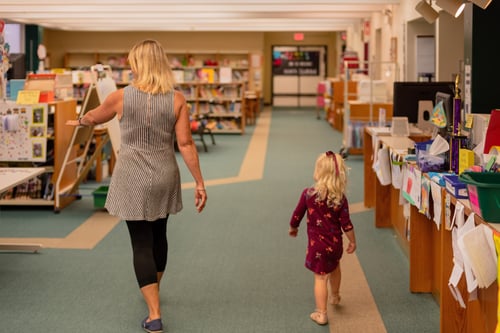
Your local library is one of the most underrated resources in Aotearoa for young families — and it costs nothing to use. Not just books, though the books are excellent. Libraries offer free programmes, regular community connection, a warm indoor space, and a genuine invitation to belong.
More than books
Public libraries in New Zealand typically offer a range of programmes specifically for tamariki and their caregivers:
- ✓**Storytime sessions** — usually weekly, often free, usually led by experienced librarians who know how to hold a room of wriggly toddlers.
- ✓**Baby bounce** — songs, rhymes, and movement for very young infants and their caregivers. Often as much for the caregiver as for the baby.
- ✓**School holiday programmes** — craft, storytelling, and science activities that give structure to unstructured weeks.
- ✓**Summer Reading Challenge** — a light incentive programme that builds the reading habit across the summer break.
- ✓**Digital literacy support** — some libraries offer help with devices and internet access for families who need it.
None of these require booking months in advance or paying a fee. Many are drop-in. You can turn up without notice with a toddler who refused to nap and still have a good hour.
Libraries as resilience infrastructure
Resilience — the capacity to manage difficulty and bounce back — is built through connection and safe, predictable experiences. Libraries are one of the few spaces in a community that offer both for free, with no purchase required.
A child who goes to Storytime regularly learns something valuable without anyone naming it: that there are people outside their home who welcome them, who know their name, who are glad to see them. That belonging extends beyond the family. That the world can be a friendly place.
For caregivers, the library offers a similar gift. A regular weekly programme gives shape to an otherwise formless day. It provides a destination, a reason to get dressed, and — crucially — other adults who are in the same boat. That incidental social contact matters more than it sometimes gets credit for.
Using the library alongside Tiny Steps
Several activities in the Tiny Steps library connect naturally to a library visit — choosing a book together, listening to a story, looking for a particular colour or animal in picture books. A library trip can anchor a whole sequence of play ideas without any additional cost or planning.
You can also use the library to supplement whatever developmental area you are focused on. If your child is in a language and speech phase, the librarian can often recommend picture books that support vocabulary development. If they are going through a big feelings moment, there are books for that too.
A low-pressure social space
One of the challenges of early parenting is that many social spaces come with implicit performance pressure: playgroups where you feel you need to be engaging, cafes where a loud child creates stress, activities where other parents seem to be managing better than you.
Libraries are different. The culture in most New Zealand libraries — especially during children's sessions — is relaxed and inclusive. Crying babies are understood. Runaway toddlers are gently returned. Mess is expected and managed. You are not being assessed.
That low-pressure quality makes libraries particularly valuable for caregivers who are struggling — with mental health, with isolation, with the grinding tiredness of early parenting. Showing up is the whole requirement. Everything after that is a bonus.
Finding your library
Every public library in Aotearoa has a website with programme listings. Most also post on social media and keep printed schedules at the front desk. Your library card is free. If you do not have one, you can register on your first visit with ID and a proof of address.
The resources page is a good starting point if you are unsure what your local library offers. Some communities also have mobile library services for families in rural areas — worth looking into if travel is a barrier.
The library is not just a place to return books. It is a place where your whānau is welcome, where learning happens naturally in the presence of warmth and safety, and where resilience is quietly being built every time a child hears a story among people who care about them. Show up. See what happens.

Written by
Tiny Steps programme team
Part of the Vector Group Charitable Trust Resilience Programme. Tiny Steps shares practical, educational content for whānau in Aotearoa.
Ready for today's tiny steps?
Open Today for five gentle ideas you can try with your whānau.