Helping with laundry as dignity practice
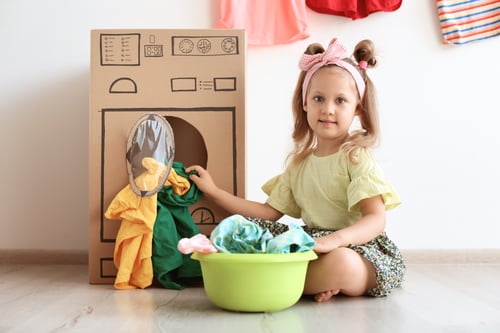
When you trust a child with a real task — not a toy version — and let the result stand, you communicate something powerful: your contribution matters here. This is dignity.
What we mean by dignity
Dignity is not a word that usually appears in conversations about laundry. But we use it deliberately.
When a young child is given a real household task — not a pretend task, not a plastic toy version of the thing — and their contribution actually counts, something happens in them. They feel useful. They feel capable. They feel like a member of the household, not just a person who is cared for by it.
That feeling — 'I contribute here, my work matters, I am trusted with real things' — is dignity. And laundry is a surprisingly good place to find it.
Why laundry works
Laundry has the ideal shape for a young helper. It comes in stages, and each stage has a version a toddler or preschooler can genuinely manage:
- ✓Sorting dirty clothes into the basket (a real job, done at their level)
- ✓Carrying small items to the machine
- ✓Pressing the start button — a coveted task if you have ever offered it
- ✓Moving dry clothes from the dryer to the basket
- ✓Carrying folded piles to the right room
- ✓Finding socks that match — a game and a useful task simultaneously
- ✓Folding light items like face cloths or tea towels with guidance
None of these are pretend contributions. They are the actual laundry, being done.
The imperfect fold
The fold will not be perfect. The socks will not always match. The pile your child carries across the house will arrive rumpled. This is correct.
Resist the urge to redo it in front of them. Accept the imperfect contribution and add it to the pile. The pile is not the point. The child who helped is the point.
When we redo children's contributions in front of them, we communicate — very efficiently — that their work is not quite good enough. They tend to remember this message, and to stop offering.
On slowness
Doing laundry with a two-year-old takes longer. Roughly twice as long. This is the honest cost. On days when you have time and space, it is worth paying. On days when the laundry genuinely needs to happen fast, it is fine to do it yourself and let them help with something else.
The practice of working alongside children does not need to happen every time. It needs to happen often enough that it is the expected pattern — that helping is normal, that their contribution is expected and welcomed, that they belong in the work of the household.
The longer arc
Children who grow up with genuine household responsibilities tend to carry them more willingly as they grow. Not because they were trained to, but because the relationship between task and belonging was established early. Doing things together was how you were together. The household was something you all participated in.
This tends to look, in adolescence, like a teenager who does their own washing without being asked — not because they are obedient, but because that is just what people who live here do.
Starting very small
You do not need to restructure your household routines. Start with one task that a young child can genuinely do. Let them do it beside you, imperfectly, and accept the result with warmth. 'Thank you, that was a real help.' And then do it again tomorrow.
The accumulation of small, real contributions is how a child comes to understand themselves as capable and needed. Laundry is as good a place to start as any.
For more practical activity ideas, explore our activities or see this week's suggestions.
What children take away
Children who grow up doing real household tasks do not just learn the tasks. They develop a particular quality of attention — the ability to notice what needs doing in a shared space and to respond to it. They become people who, when they see an empty dishwasher, empty it. When they see a full bin, take it out. Not because they were trained to, but because they developed the habit of noticing and responding.
This quality — sometimes called domestic attentiveness — is one of the most undervalued skills in adult life. It makes partnerships more equitable, homes more pleasant, and shared spaces more functional. It begins in a two-year-old carrying a small pile of folded tea towels to the kitchen cupboard.
The dignity of being trusted
When you hand a child a real task and let the result stand, you are trusting them. That trust is felt. Over many repetitions, it becomes part of how a child understands themselves: as someone who can be trusted, who is capable, who contributes. That self-understanding is worth more than any amount of structured confidence-building activity.
For more on practical family skills and daily routines, explore our activities.

Written by
Tiny Steps programme team
Part of the Vector Group Charitable Trust Resilience Programme. Tiny Steps shares practical, educational content for whānau in Aotearoa.
Ready for today's tiny steps?
Open Today for five gentle ideas you can try with your whānau.