Growing Moments Without Ticking Boxes
Development is not something you produce — it is something you witness and support. Here is how to stay present without turning every moment into a checklist.
Your child is growing right now. Not when you complete the next activity, or tick the next milestone, or try the suggested sensory play. Right now, while they are playing with a cardboard box, or watching a dog through the window, or trying to eat a crayon.
Development is not something you produce. It is something you witness and support. The difference matters more than it might seem.
The problem with the checklist mindset
When parenting becomes a series of boxes to tick, something starts to shift in the wrong direction. The bath time conversation that used to be warm becomes a delivery mechanism for vocabulary-building. The walk outside that used to be joyful becomes an opportunity to practise colour names. The play that used to be play becomes structured enrichment.
Children notice this. They are extraordinarily sensitive to the emotional quality of an interaction — whether an adult is genuinely present or running through a script. When the energy shifts from delight to instruction, something in the moment changes.
This is not an argument against intentionality. Knowing that outdoor time supports physical development and sensory processing is useful — it helps you prioritise a walk on a day when you might otherwise have stayed inside. But intentionality is different from performance. You can be intentionally present without performing.
What growing moments actually look like
A growing moment is any moment where connection and curiosity are both alive. It does not need a prop or a plan. Some examples:
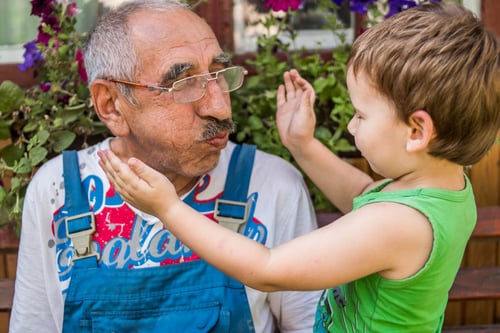
- ✓Your child points at something and you look at it together, naming it.
- ✓You narrate what you are doing while you fold laundry, and they watch and listen.
- ✓They try to do something difficult, fail, and you stay calm and encouraging.
- ✓You make a silly noise, they laugh, you do it again.
- ✓You sit together in comfortable silence.
None of these are activities. All of them are development.
The milestones tracker is there to help you notice and record these moments — not to prompt you to manufacture them. When you notice something new your child can do, recording it is a way of saying: I saw you. That thing you did matters.
Why the activity is a prompt, not the point
Activities — the ones in Tiny Steps, or anywhere else — exist to give you a starting point when you are stuck. When you cannot think of what to do, or when you are bored, or when the afternoon stretches ahead with no shape, an activity idea can break the inertia.
But the activity is always just the opener. What matters is what happens in the doing of it — whether you are both present, whether there is laughter, whether your child feels seen. A suggested activity done as a flat, dutiful performance is less valuable than a spontaneous thing that arose from genuine curiosity.
Browse the activities library when you want ideas. And then let go of the plan as soon as you have started.
Trusting your own noticing
One of the undervalued skills in caregiving is the ability to notice — to see what your child is drawn to, what frustrates them, what brings them back again and again. This is information that no app or checklist can generate. It comes from being with your child, repeatedly, over time.
KidsHealth NZ talks about how responsive caregiving — the kind where adults follow the child's lead — is one of the strongest predictors of healthy development. You do not need to know the theory to practise it. You just need to watch.
Watch what your child does when they have unstructured time. Watch what they return to. Watch what makes them laugh. That watching is not passive. It is one of the most active things you can do as a caregiver.
A gentle reframe
If you find yourself feeling behind — like other parents are doing more, or like you are not ticking enough boxes — try this reframe: development is not a race, and your child is not a project.
They are a person, becoming themselves, in the particular way that only they can. Your job is not to build them — it is to be with them while they build themselves. That is enough. It is more than enough.

Written by
Tiny Steps programme team
Part of the Vector Group Charitable Trust Resilience Programme. Tiny Steps shares practical, educational content for whānau in Aotearoa.
Ready for today's tiny steps?
Open Today for five gentle ideas you can try with your whānau.