Community: waving at neighbours as belonging
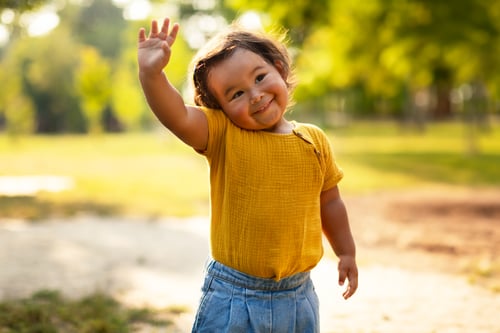
Waving at neighbours is a small, almost trivial act. But for a young child watching, it is one of the first lessons in what community actually means.
A small act, a significant lesson
There is a house a few doors down from most of us where a child always seems to be watching from the window. And if you wave, they light up.
Waving at neighbours — a simple, almost trivial act — is one of the earliest lessons in community available to young children. It says: the world beyond our door contains people, and we acknowledge them. They are not strangers to be avoided. They are neighbours — part of the landscape we live in, worth noticing.
What children learn from greeting rituals
When adults model regular, warm acknowledgement of the people around them, children absorb several things without being taught:
- ✓The world is populated with people worth noticing. Not just family, not just people you know well, but the person in the house across the street, the man who walks his dog at 7am, the woman who gardens on Sunday mornings.
- ✓We are part of something larger than our household. A child who waves at neighbours has, in a small way, extended their sense of where they belong.
- ✓Acknowledgement is a gift you can give for free. It costs nothing and communicates: I see you. You exist. You are part of my world.
Expanding the ritual
Waving at neighbours is the beginning. The practice can widen gradually:
- ✓Learn the name of the person who runs your local dairy or corner store, and use it.
- ✓Say a genuine thank you to the bus driver, audibly.
- ✓Let your child post a letter at the postbox. The act of sending something into the postal system is a small experience of community infrastructure.
- ✓Take a bag of feijoas (or whatever your garden produces) to a neighbour.
- ✓Help carry something for an older person nearby.
None of these require an extroverted child. A shy child can watch you do all of these things, and the watching is the learning.
Manaakitanga and neighbourliness
Manaakitanga — the practice of generosity, hospitality, and care for others — is woven into te ao Māori and is one of the core values of Aotearoa New Zealand. The values of looking out for those nearby, of acknowledging others, of offering warmth in small ways, run through many of the cultures that make up the communities of this country.
Waving at the neighbour is not a culturally neutral act. It is a small expression of something important: that we are responsible for each other, in however ordinary and imperfect a way.
When children are shy or anxious
You do not need to push a shy child into waving or greeting. You can model it yourself and let them stand beside you, watching. Over time, some children warm to the ritual on their own. Others remain observers — and the observation still teaches.
What matters is not the performance of warmth, but the habit of noticing and acknowledging the people in the world around you. A child who grows up seeing this done regularly will carry it, even quietly.
The neighbourhood as an extended world
For young tamariki, the world is still very small. Home is the centre. The kindergarten, the park, the local streets are the edges. Within that small world, the people who live nearby are an extraordinary resource — for familiarity, for safety, for the gentle texture of knowing where you live.
A wave hello is how that knowing begins.
Learn more about how Tiny Steps supports family connection or explore activities that build community confidence.
Building safety through familiarity
A child who knows the neighbours — even slightly, even just by sight — has a different experience of their street than one for whom all the houses are anonymous. If something goes wrong, a familiar face is a resource. If a child is distressed outside, a neighbour who recognises them can help.
The wave at the gate is not just a social nicety. Over time, it builds a network of familiar faces that makes the neighbourhood safer for everyone in it, but especially for the smallest members.
What community takes
Community does not build itself. It is made of the accumulated small acts of acknowledgement — the wave, the nod, the name remembered, the door held. These are not grand gestures. They are the ordinary maintenance of the web that holds a neighbourhood together.
For young children watching, they are also a lesson in what it means to be a person who shows up for the people around them.
For more on community connection, visit our about page or explore activities that build belonging.

Written by
Tiny Steps programme team
Part of the Vector Group Charitable Trust Resilience Programme. Tiny Steps shares practical, educational content for whānau in Aotearoa.
Ready for today's tiny steps?
Open Today for five gentle ideas you can try with your whānau.