
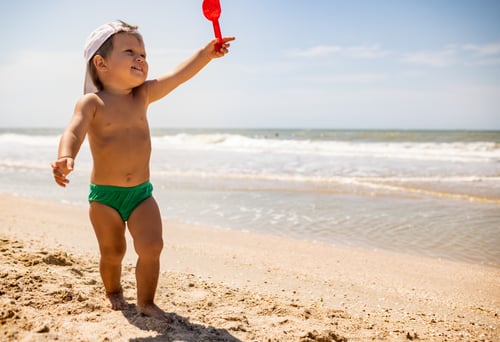
Beach days: wonder over perfection
A beach trip with a toddler is nothing like a beach trip without one. Sand in everything, a crying storm over a lost shell, sunscreen negotiations. And underneath all of it — pure wonder.
The beach you imagined and the beach you get
Somewhere in your head lives the beach day: the calm, well-stocked kit bag, the child who plays happily at the water's edge while you sit in the sun and breathe. And then there is the actual beach day with an under-five: sunscreen negotiations, a tantrum about a shell that got washed away, sand in absolutely everything including the snacks.
The gap between those two versions of a beach day is where a lot of parental suffering lives. Closing that gap isn't about better planning. It's about a different expectation altogether.
Wonder as the actual goal
The goal of a beach trip with a young child is not relaxation. It is wonder. And wonder, it turns out, is everywhere on a beach if you stop trying to manage the experience and start paying attention to what your child is actually doing.
A two-year-old at the water's edge is encountering something genuinely extraordinary: water that moves without being pushed, sand that shifts under their feet, creatures that live in rocks. None of this is ordinary. It only seems ordinary because we have been to the beach before.
What to notice together
Aotearoa's beaches are specific and rich. Rocky shores offer pātiki (flounder), kina (sea urchin) shells, pāua fragments worn smooth by waves, and the green-black weed that pops when you press it. Sandy beaches offer shells of all sizes, sandhoppers, oystercatchers probing the tideline, and the particular sensation of wet sand giving way underfoot.
You do not need to name everything. But the habit of noticing together — 'look at that one, what do you think lives in there?' — is one of the best gifts you can build at the beach.
Practical approaches that help
- ✓Start small. A short beach visit with a well-rested child is better than a full day with an overtired one.
- ✓Pack a change of clothes and accept that they will be needed.
- ✓Bring a small bucket — more useful than almost anything else for a toddler at the beach.
- ✓Let them choose their level of contact with the water. Some children are bold and some are cautious, and both are right.
- ✓Have a snack ready for when the hunger hits suddenly, as it will.
Sun safety matters in Aotearoa
New Zealand has some of the highest UV levels in the world, and skin damage can happen even on overcast days near the water. Slip (cover up), Slop (sunscreen — applied before you leave, not after you arrive), Slap (a hat), Wrap (sunglasses) applies for the whole family. A UV protective swimsuit for young children makes this far easier than reapplying sunscreen every hour.
For detailed guidance, Healthline NZ has clear summer sun safety advice for young children.
When things go sideways
The wave that knocked them down. The ice cream that fell before it was eaten. The other child who got there first. These are not failed beach days. They are real ones. A child who cries at the beach and is comforted and stays and tries again is learning something no perfectly planned day can teach.
On taking photos
There is a particular kind of beach parent who spends the whole afternoon trying to photograph the perfect moment. But the most connected beach days happen when the phone is in the bag. Be in it with them. The wonder you share on that beach does not need to be photographed to be real.
For seasonal outdoor activities year-round, explore the activities section — and remember that imperfect days together are the ones that actually last.
The long memory of the beach
Ask most New Zealand adults what they remember from early childhood and a beach will appear in most answers. Not a perfect beach — just a beach. The texture of the sand, the smell of salt, the sound of the waves. Simple, sensory, true.
That is what you are building on a messy, imperfect, wonderful beach day. Not an Instagram memory. A real one.
A word about rock pools
NZ rock pools are among the safest and most rewarding wildlife encounters available to young children. Go at low tide, look without touching where possible, and name what you find: pāua clinging to rock faces, small fish darting under weed, hermit crabs dragging borrowed shells. You do not need to know every species. You just need to crouch beside your child and look together.
For seasonal outdoor ideas throughout the year, explore our activity packs or browse today's suggestions in the Tiny Steps app.

Written by
Tiny Steps programme team
Part of the Vector Group Charitable Trust Resilience Programme. Tiny Steps shares practical, educational content for whānau in Aotearoa.
Ready for today's tiny steps?
Open Today for five gentle ideas you can try with your whānau.